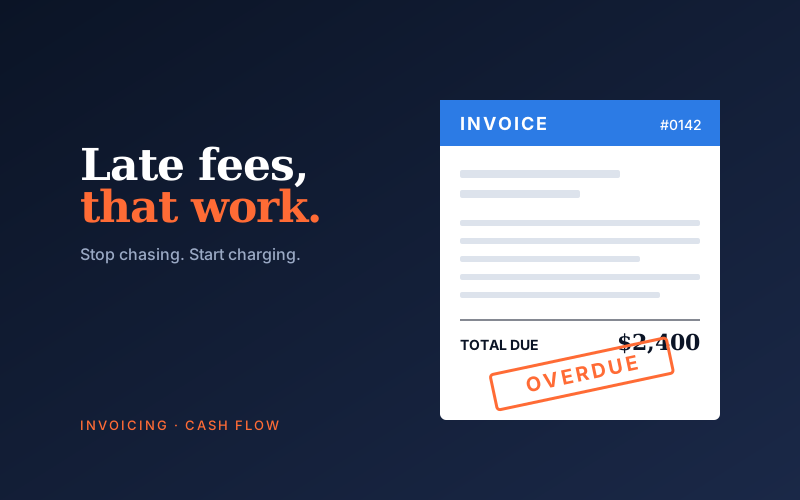
The first time a client paid me 60 days late, I sent three increasingly polite emails and got the money plus an apology. The second client did the same thing, ignored my emails, and I learned a lesson: politeness is not a collection strategy.
Why most late fees fail
Most freelancer late fees fail for a simple reason: they appear for the first time on the overdue invoice. By that point you have no contractual basis for them, the client knows it, and you are bluffing. Bluffs do not collect money.
A working late fee has three components — and all three need to be in place before the invoice is overdue:
- Mentioned in the contract or accepted terms before work began.
- Stated explicitly on the invoice itself, before the due date passes.
- Triggered automatically and visibly when the date passes.
The contract clause
The clause that has worked for me, paraphrased so I am not handing you legal advice:
Invoices are due within 14 days of issue. Invoices not paid within 14 days will accrue a late fee of 1.5% per month (compounded), calculated daily from the original due date until paid in full. Disputed amounts must be raised in writing within 7 days of the invoice date.
The "disputed amounts" clause is the hidden value. It prevents the classic stall: "we have some questions about the invoice" sent on day 90. If they did not raise it on day 7, they cannot use it on day 90.
Invoice template language
On every invoice, near the total, I include a single line: "Net 14. A late fee of 1.5% per month applies to overdue balances per our agreement."
This single sentence does more than any reminder email. It signals that the fee is a mechanical default, not a confrontation. Clients who pay on time never notice it. Clients who pay late see it on day 15 when they look at the invoice again.
When to actually charge
- Days 1 to 14 — silence. The invoice is not late.
- Day 15 — automated friendly reminder, fee mentioned but not yet applied.
- Day 30 — direct human email, late fee now applied to the next invoice.
- Day 45 — phone call or video call request. Most invoices clear within 48 hours of a real conversation.
- Day 60+ — pause new work, formal demand letter, factoring or collections if the relationship is over.
The point is not to maximize fee revenue. Late fees that you actually collect will never be material. The point is to give clients a structural reason to pay on time, and to give you a structural reason to not feel guilty about asking.