Quarterly taxes are the part of self-employment that most people get wrong in their first year and never get wrong again. The mistakes are expensive but not complicated, and the system is forgiving once you understand the safe harbor rule.
Why employees never think about this
When you work a salaried job, your employer withholds tax from each paycheck and sends it to the government on your behalf. By April 15, the government already has most of what you owe. Your tax return mostly reconciles small differences.
When you work for yourself, nobody is withholding. Without quarterly payments, you would arrive at April with a 12-month tax bill and no system pre-funding it. The government caught on to this decades ago and built quarterly payments specifically for the self-employed.
Who actually has to pay quarterly
In the US, the trigger is simple: you owe quarterly payments if you expect to owe more than $1,000 in tax for the year and your withholding (from a side job or a spouse) will not cover it. For most full-time freelancers and solo founders, this means you owe quarterly. For someone with a side hustle plus a W-2 day job, it depends on whether the day-job withholding covers the side income too.
The safe harbor rule
The single most useful concept in quarterly taxes is the safe harbor rule. If you pay either:
- 100% of last year's total tax (110% if your AGI was over $150,000), or
- 90% of this year's actual tax owed,
… you owe no underpayment penalty, regardless of what your actual tax bill turns out to be.
The first option is gold. It means you can ignore the question "what will my income be this year?" and just match last year's number divided by four. If you have a great year, you settle up in April with no penalty. If you have a slow year, you might overpay slightly and get a refund.
A 10-minute calculation method
- Open last year's tax return. Find the total tax line (1040, line 24 in recent years).
- If your AGI was over $150k, multiply by 1.10. Otherwise use the number as is.
- Divide by four. That is your quarterly payment.
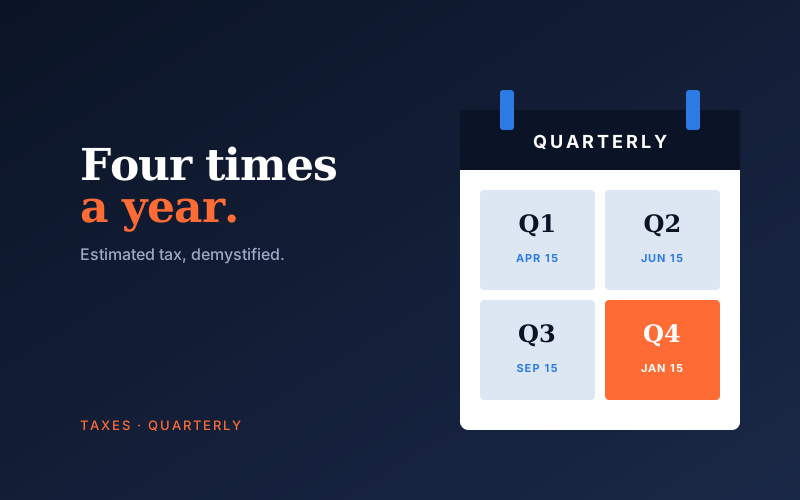
- Pay it on each of the four deadlines via IRS Direct Pay (free) or EFTPS.
That is the entire system. It does not optimize for paying the lowest possible amount each quarter — it optimizes for never paying a penalty, never thinking about it, and never being surprised. For most solo operators, that trade-off is worth it.
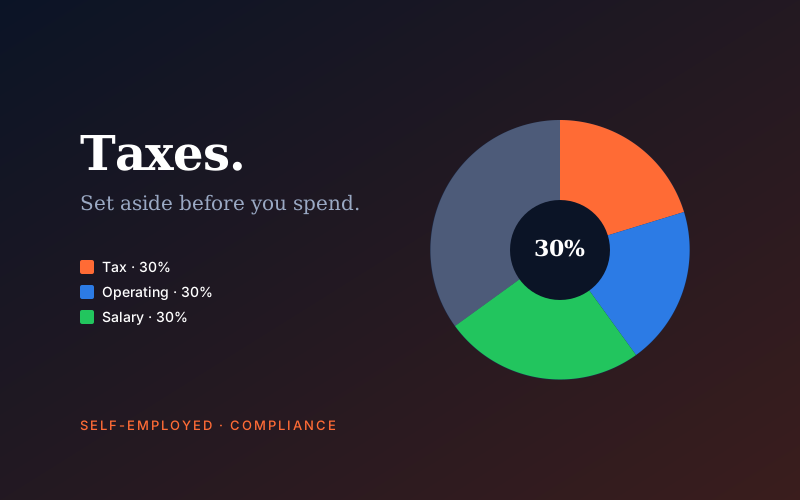
If you had a much bigger year than last year, you will owe more in April. Set that money aside in your tax bucket using the 30% rule, and the April reconciliation just becomes paperwork.